
The latest government and non-profits news from Asia and the Pacific
Provided by AGP
Synthetic Fibers Market Size Worth USD 162.40 Billion by 2035
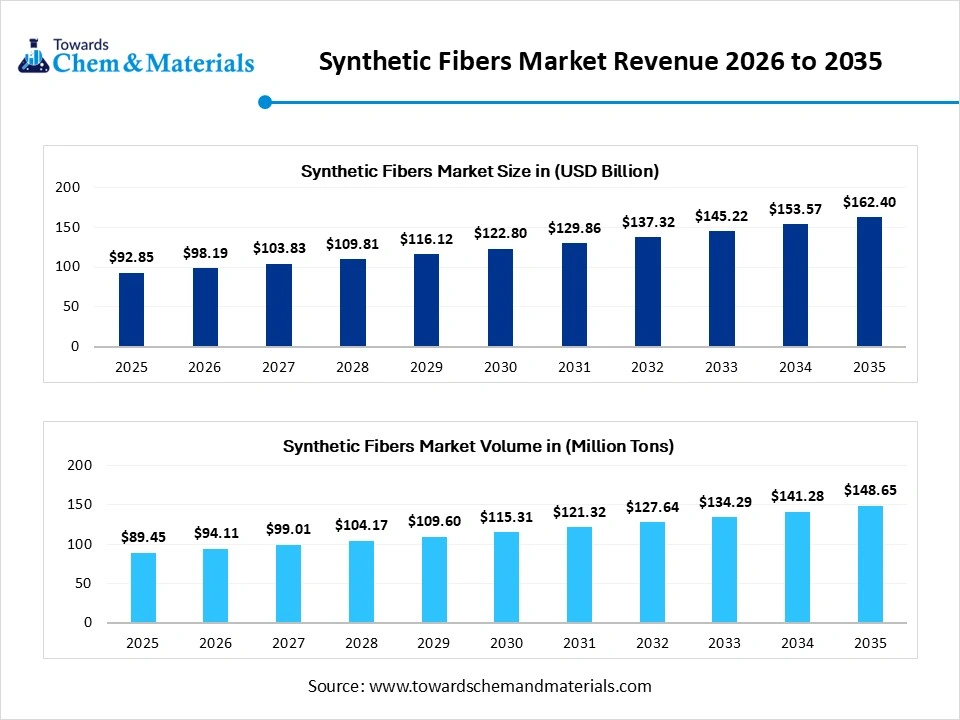
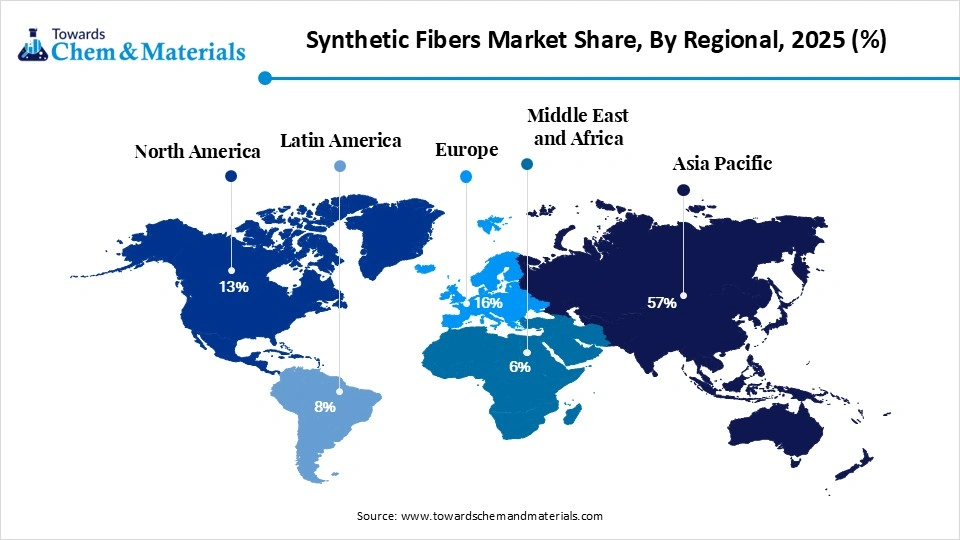
The global synthetic fibers market size reached USD 92.85 billion in 2025 and is expected to be worth around USD 162.40 billion by 2035, exhibiting a compound annual growth rate (CAGR) of 5.75% over the forecast period from 2026 to 2035. Asia Pacific dominated the synthetic fibers market with the largest revenue share of 57 % in 2025. A study published by Towards Chemical and Materials a sister firm of Precedence Research.
Ottawa, April 28, 2026 (GLOBE NEWSWIRE) -- According to Towards Chemicals and Materials Analytics and Consulting, the global synthetic fibers market was valued at USD 92.85 billion in 2025, is estimated to reach USD 98.19 billion in 2026, and is projected to reach USD 162.4 billion by 2035, growing at a CAGR of 5.75% from 2026 to 2035. In terms of volume, the synthetic fibers market is projected to grow from 89.45 million tons in 2025 to 148.65 million tons by 2035. growing at a CAGR of 5.21% from 2026 to 2035. The synthetic fibers market is growing steadily with rising demand from textiles, automotive, and construction sectors, supported by recycling innovations and sustainable fiber development.
Don’t miss out on business opportunities in Synthetic Fibers Market. Speak to our analyst and gain crucial industry insights that will help your business grow. {Download a Sample Report Here@ https://www.towardschemandmaterials.com/download-sample/6339 }
What are the Factors Driving of the Synthetic Fibers Market?
The synthetic fibres market is growing rapidly, as it provides strong combinations of benefits: performance advantages, cost effectiveness, and increased global consumption of textiles. The textile exchange states that total global fibre production will be approximately 132M tonnes by 2024, with synthetic fibres accounting for approximately 69% of that amount. This illustrates the dominant position of synthetics in apparel, automotive and industrial applications. Polyester, in fact, will contribute about 57% of total fibre production; its strength, lightweight characteristics, and low production costs are driving this increase.
The innovation of recycled synthetics including rPET is accelerating as a result of added pressures to adhere to sustainable regulations, and circular economy principles. In addition, governments and industry organisations are promoting textile recycling and working to lower carbon emissions, while improvements in fibre engineering, and textile-to-textile recycling technologies further fuel continued growth and long term demand.
Synthetic Fibers Market Report Highlights
- By region, Asia Pacific dominated the market with the largest share of 57% in 2025 and is expected to grow at the fastest CAGR of 6.3% over the forecast period. The dominance and growth of the region can be attributed to the ongoing urbanization.
- By region, Europe held the 16% market share in 2025. The growth of the region can be credited to the ongoing transition towards high-performance fibers.
- By fiber type, the polyester segment dominated the market with the largest share of 54% in 2025. The dominance of the segment can be attributed to its cost-effectiveness and versatility.
- By fiber type, the polyolefin segment is expected to grow at the fastest CAGR of 6.3% over the forecast period. The growth of the segment can be credited to its ability to improve chemical resistance.
- By application, the apparel segment dominated the market with the largest share of 46% in 2025. The dominance of the segment is owed to the increasing consumer spending on textiles.
- By application, the technical textiles segment is expected to grow at the fastest CAGR of 6.6% over the forecast period. The growth of the segment is due to increasing product demand in medical and geotextiles.
- By end-use industry, the textile & apparel segment dominated the market with the largest share of 52% in 2025. The dominance of the segment can be linked to the surge in population growth.
- By end-use industry, the healthcare segment is expected to grow at the fastest CAGR of 6.5% during the projected period. The growth of the segment can be driven by rapid innovation.
- By distribution channel, the direct sales (B2B) segment dominated the market with the largest share of 58% in 2025. The dominance of the segment can be attributed to its ability to boost supplier relationships.
- By distribution channel, the online channels segment is expected to grow at the fastest CAGR of 6.9% during the study period. The growth of the segment can be credited to the expansion of the e-commerce industry.
At a glance
- Market Estimated Size (2025): USD 92.85 Billion | CAGR (2026–2035): 5.75%
- Market Projected Size (2035): USD 162.40 Billion
- Market Volume (2025): 89.45 Million Tons (MT) | Volume CAGR (2026–2035): 5.21%
- Market Projected Volume (2035): 148.65 Million Tons (MT)
-
Market Pricing (2025):
- Average Manufacturing Price: USD 1,430/ton
- Average Selling Price: USD 1,990/ton
- Pricing CAGR (2025–2035): 3.11%
Request Research Report Built Around Your Goals: sales@towardschemandmaterials.com
There are several common types of synthetic fabrics:
- Polyester : is one of the most widely used synthetic fabrics. It’s known for being strong, resistant to wrinkles, and able to hold its shape without stretching or shrinking easily. Because of these qualities, it’s often mixed with other fibers and used in everything from clothes and home furnishings to industrial products.
- Nylon : is another popular synthetic material. It’s lightweight yet very strong and flexible. Nylon also resists wear, tear, and chemicals, which makes it a great choice for items like stockings, swimwear, ropes, and other heavy-duty applications.
- Polypropylene: is a lightweight fabric that doesn’t absorb moisture easily. It also provides good insulation, which helps keep warmth in. Because of these features, it’s commonly used in sportswear, thermal clothing, and even disposable medical garments.
- Acrylic: fibers are soft, warm, and lightweight, often used as a more affordable alternative to wool. You’ll usually find acrylic in sweaters, blankets, and other winter wear because it provides warmth without the high cost of natural wool.
- Rayon : is a bit different from the others because it’s made from natural sources like wood pulp, even though it’s processed chemically. It’s soft, breathable, and flows nicely, making it a popular choice for dresses, blouses, and linings.
- Spandex : (also known as Lycra or elastane) is famous for its stretch. It can expand significantly and return to its original shape, which is why it’s often blended with other fabrics. It’s commonly used in activewear, swimwear, and tight-fitting clothing.
-
Polyethylene : fabrics are designed for strength and water resistance. They are often used in outdoor and protective applications, such as camping equipment, outdoor furniture, and waterproof clothing.
Synthetic Fibers Market Opportunity
There is a lot of potential opportunities in the synthetic fibre market due to the increasing global demand, innovation, and government backing. The Indian government, for example, is on track to increase its textile exports by 2030 due to programs such as PLI schemes and integrated manufacturing, which will lead to an increase in man-made fibre (MMF) production. According to UNCTAD, in the global market, synthetic fibres make up around 65-70% of the total value of yarns and fabrics traded, showing the continued growth of synthetic fibbers’ commercial application.
The industrial use of polyester alone accounts for approximately 59% of the total production of fibres in the world. This reflects the large dependence that industries have on these materials. Factors such as the growing need for technical textiles in the healthcare sector, automotive industry, and infrastructure, as well as the increased focus on hygiene and fitness for society as a whole will undoubtedly assist in this process. The recent easing of policies and an increase in investment in the MMF segment will create new opportunities for innovation and export potential.
Immediate Delivery Available | Buy This Premium Research Report (Global Deep Dive
USD 3200) https://www.towardschemandmaterials.com/checkout/6339
Synthetic Fibers Market Report Scope
| Report Attribute | Details |
| Market Size and Volume in 2026 | USD 98.19 Billion / 94.11 Million Tons |
| Projected Market Size and Volume in 2035 | USD 162.4 Billion / 148.65 Million Tons |
| Growth rate | CAGR of 5.75% from 2026 to 2035 |
| Base year for estimation | 2025 |
| Historical data | 2021 - 2025 |
| Forecast period | 2026 - 2035 |
| Quantitative units | Volume in kilotons, revenue in USD million/billion, CAGR from 2026 to 2035 |
| Report coverage | Volume forecast, revenue forecast, company ranking, competitive landscape, growth factors, trends |
| Segments covered | By Fiber Type, By Form, By Application, By End-Use Industry, By Distribution Channel and By Regions |
| Regional scope | North America; Europe; Asia Pacific; Central & South America; Middle East & Africa |
| Country scope | U.S., Canada, Mexico, Germany, UK, France, China, India, Taiwan, Brazil |
| Key companies profiled | Bombay Dyeing; E. I. du Pont de Nemours and Company; Indorama Corporation; Lenzing AG; Mitsubishi Chemical Holdings Corporation; Reliance Industries Limited; China Petroleum Corporation (Sinopec Corp.); Teijin Limited; Toray Chemical Korea, Inc.; Toyobo Co., Ltd. |
For more information, visit the Towards Chemical and Materials website or email the team at sales@towardschemandmaterials.com| +1 804 441 9344
What Is Driving Asia Pacific's Dominance in the Global Synthetic Fibres Market?
The Asia Pacific synthetic fibers market size was estimated at USD 52.92 billion in 2025 and is projected to reach USD 93.38 billion by 2035, growing at a CAGR of 5.84% from 2026 to 2035.
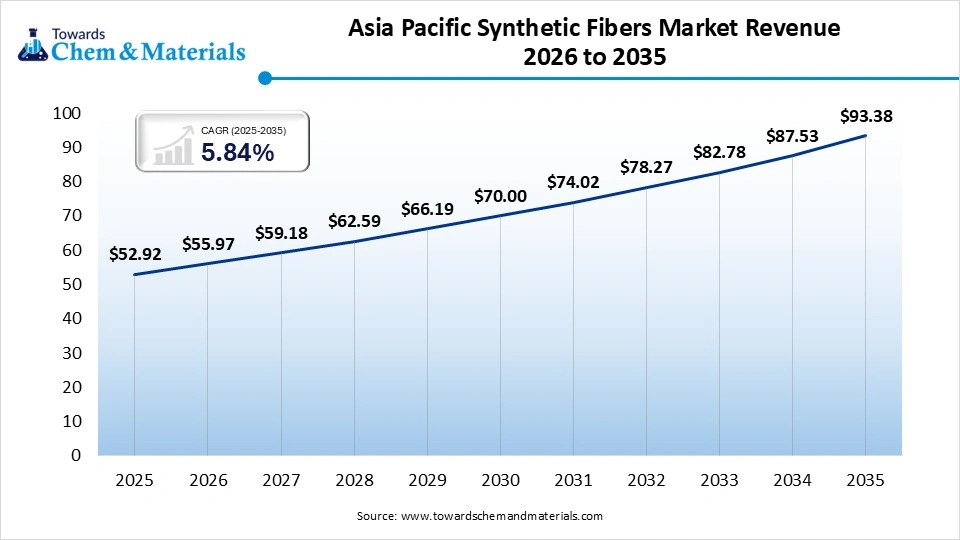
Asia Pacific has established itself as the dominant region in the global synthetic fibres market due to its strong manufacturing capabilities, low-cost labour, and substantial manufacturing capacity. Major textile and apparel production centres in countries such as China, India and Vietnam have created significant demand for polyester and nylon fibres, which are the two most prevalent synthetic fibres used in making textiles. In 2025, China exported $1.28B and imported $117M of Synthetic Fabrics. The rapid development of the fashion, automotive, and home furnishing industries continues to fuel demand for synthetic fibres. Additionally, as manufacturing activity continues to increase across Asia Pacific, both expanding export initiatives and government policies aimed at stimulating textile production will help consolidate this position. Finally, both the availability of raw materials and ongoing investments in technology has allowed producers to continue to invest heavily in state-of-the-art fibre manufacturing processes.
Why Is Europe the Fastest Growing Synthetic Fibre Market?
The European region is now the fastest growing in the global synthetic fibres market, largely due to the rise in the demand for sustainable and high-performance yarns and fibres. As countries such as Germany, France and Italy work together to develop and implement recycling technologies and bio-based synthetic yarns and fibres, they are addressing strict environmental regulations. There has also been an increase in the use of synthetic fibres in automotive lightweighting and technical textiles which are driving growth in these categories. In addition, increased innovation surrounding circular economy best practices and collaborations between textile manufacturers and research institutions have aided in accelerating this growth. The ongoing transition toward sustainable fashion and advanced applications will continue to stimulate rapid growth in the European region for many years to come.
Immediate Delivery Available | Buy This Premium Research Report (Global Deep Dive
USD 3200) https://www.towardschemandmaterials.com/checkout/6339
Synthetic Fibers Market Segmentation Insights
Fiber Type Insights
Why is Synthetic Fibers the leading Segment in Synthetic Fibers Market?
In the synthetic fibers market for 2025, polyester has dominated due to having an excellent mix of being affordable, durable, and versatile across many applications. Polyester is widely used in apparel, home furnishing, and industrial fabrics because of its availability and compatibility with the blending process. The continued growth in producing recycled polyester has increased the attractiveness of this fiber to manufacturers seeking cost-effective yet sustainable solutions.
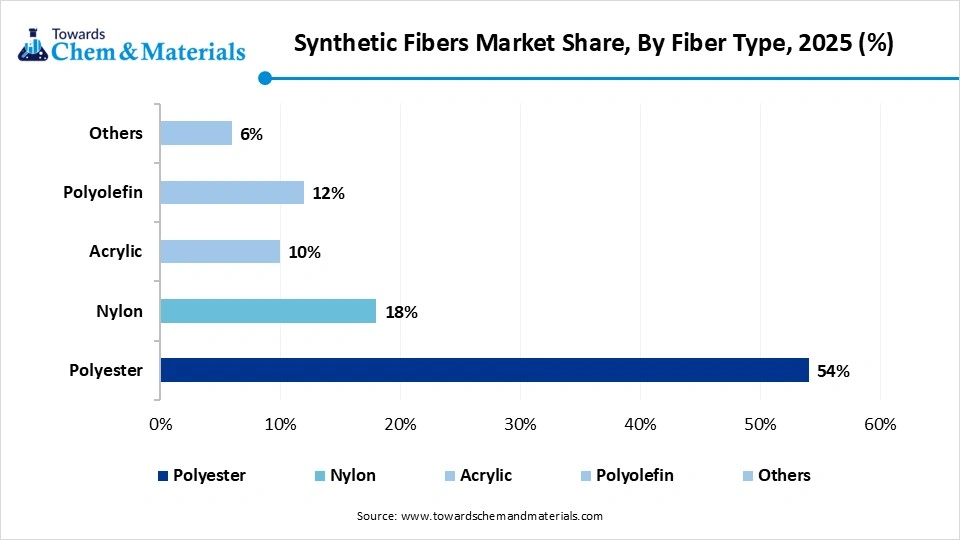
The polyolefins will have the highest projected growth in the synthetic fibers market due to their excellent chemical resistance and light weight. Currently, they are being used more often in packaging, medical textiles, and other industrial applications requiring tough products able to withstand difficult conditions. Ongoing developments in polymer processing and rising demand for high-performance materials further drive demand for polyolefin fibers.
Application Insights
Which Application Dominates the Synthetic Fibers Market?
The application segment of the textile market was the largest in 2025 and continues to grow as a result of increased global consumer spending on clothing and fashion-oriented apparel. The benefits of synthetic fibres for apparel include their ability to resist wrinkles and retain their colour longer than natural fibres, make them more suitable for mass production. Fast fashion and rapid urbanisation have also created a sustained demand for synthetic textiles in the apparel segment.
The technical or performance textile application will have the highest expected growth during the forecast period due to the increasing number of applications for performance textiles including medical textiles, geotextiles, and protective textiles that will require performance qualities. The increase in investment in infrastructure (e.g., roads, bridges) and improvements in healthcare are helping to drive the development of synthetic fibre products that can provide performance benefits, such as strength, durability, and functionality, which are essential for products used in these developing applications.
End Use Industry Insights
Why Textiles & Apparel Segment Dominates the Synthetic Fibers Market in 2025?
Textiles & apparel continues to be the largest end use industry in 2025, mainly due to the increasing world population and the continued high demand of the world population for low cost clothing options. The scalability and consistent quality of synthetic fibers make them an ideal choice for large-scale production of textiles. The trend of the expanding retail network and the awareness of fashion continue to support growth and success of the textiles & apparel segment around the world.
Health care is expected to grow at the highest rate over the forecast period, driven by the rapid development of new medical-grade materials. The increasing use of synthetic fibers in surgical gowns, masks, wound care products, and implants is partly due to these materials' hygienic and durable qualities. Support for continued growth in health care includes increased investment and demand for advanced medical care solutions.
Distribution Channel Insights
Which Distribution Channel Segment Dominating in 2025?
The direct sales (B2B) will dominate the distribution channels segment in 2025 because it provides strong supplier-manufacturer relations, allowing for bulk buying efficiencies. Direct sourcing is also preferred by major textile companies due to the ability to maintain consistent quality and to obtain price concessions through negotiation. Additionally, this distribution channel provides customised fibre specifications, which are essential for both industrial and large-scale production requirements.
The online distribution channels are expected to grow the fastest due to the rapid growth of e-commerce platforms and digitized methods of sourcing. As more small and medium businesses turn to online sourcing for ease of use and broader access to suppliers, logistics, digital catalogues and transparent pricing structures this will help to accelerate the movement toward online distribution.
More Insights in Towards Chemical and Materials:
- Silicon Carbide Fibers Market Size to Hit USD 19.46 Bn by 2035
- Conductive Polymer Fibers Market Size to Hit USD 1,835.37 Mn by 2035
- Engineered Fibers Market Size to Reach USD 21.12 billion by 2034
- Synthetic Fuels Market Size to Surpass USD 229.38 Bn by 2035
- U.S. Synthetic Resin Market Size to Hit USD 136.44 Bn by 2035
- Synthetic Graphite Market Size to Reach USD 16.05 billion by 2034
- Unsaturated Polyester Resin Market Size to Hit USD 33.40 Bn by 2035
- Polyester Fiber Market Size to Hit USD 274.58 Billion by 2035
- U.S. Recycled Polyester Market Size to Surpass USD 7.86 Bn by 2035
- Polyester Hot Melt Adhesives (PHMAs) Market Size to Hit USD 1,491.92 Million by 2034
- Recycled Polyester Market Size to Hit USD 42.11 Billion by 2035
- Polyester Resin Dispersion Market Size to Hit USD 14.70 Bn by 2034
- Polypropylene Yarn Market Size to Reach USD 34.01 Billion by 2035
- Polypropylene Non-Woven Fabrics Market Size to Surpass USD 60.13 Billion by 2035
- Polypropylene Random Copolymer Market Size to Hit USD 26.33 Billion by 2035
- Biaxially Oriented Polypropylene (BOPP) Market Size to Hit USD 224.40 Billion by 2035
- U.S. Biopolypropylene Market Size to Hit USD 837.7 Billion by 2035
- Bio-Based Polypropylene Market Size to Hit USD 6,977.54 Mn by 2034
- Green Polypropylene Market Size to Hit USD 72.70 Billion by 2034
- Renewable Polypropylene Market Size to Surge USD 133.67 Billion by 2034
- Polypropylene Compounds Market Size to Hit USD 52.25 Bn by 2035
- Polypropylene Market Volume to Reach 135.05 Million Tons by 2034
- U.S. Polypropylene Market Size to Reach USD 46.81 Billion by 2035
- Polyethylene Terephthalate Films Market Size to Surpass USD 110.48 Bn by 2035
- Polyethylene Glycol (PEG) Market Volume to Exceed 788,565.1 Tons by 2034
- Polyethylene Terephthalate (PET) Market Size to Reach USD 68 Bn by 2034
Synthetic Fibers Market Top Key Companies:
- Bombay Dyeing
- E. I. du Pont de Nemours and Company
- Indorama Corporation
- Lenzing AG
- Mitsubishi Chemical Holdings Corporation
- Reliance Industries Limited
- China Petroleum Corporation (Sinopec Corp.)
- Teijin Limited
- Toray Chemical Korea, Inc.
- Toyobo Co., Ltd.
What are the Major Developments in the Synthetic Fibers Market?
- In November 2025, Chryso launched the Adfil Strux 3000 Series macro-synthetic fibers for concrete reinforcement, improving durability, sustainability, and handling efficiency while replacing steel mesh and reducing labor, corrosion risks, and carbon footprint in construction projects.
- In September 2025, Intata was launched to accelerate adoption of synthetic materials in the automotive sector, focusing on sustainable alternatives to traditional leather, supporting lightweight design, improved performance, and eco-friendly interior solutions across next-generation vehicles.
Synthetic Fibers Market Report Segmentation
This report forecasts revenue growth at global, regional, and country levels and provides an analysis of the latest industry trends in each of the sub-segments from 2019 to 2035. For this study, Towards Chemical and Materials has segmented the global Synthetic Fibers Market
By Fiber Type
- Polyester
- Polyethylene Terephthalate (PET)
- Polytrimethylene Terephthalate (PTT)
- Nylon
- Nylon 6
- Nylon 6,6
- Acrylic
- Polyolefin
- Polypropylene (PP)
- Polyethylene (PE)
- Others
- Aramid
- Modacrylic
- Spandex
By Form
- Filament
- Monofilament
- Multifilament
- Staple Fiber
By Application
- Apparel
- Sportswear
- Casual Wear
- Formal Wear
- Home Furnishing
- Carpets & Rugs
- Upholstery
- Curtains
- Industrial
- Tire Cord
- Conveyor Belts
- Filtration
- Automotive Textiles
- Technical Textiles
- Geotextiles
- Medical Textiles
- Protective Clothing
By End-Use Industry
- Textile & Apparel
- Automotive
- Construction
- Healthcare
- Industrial Manufacturing
- Others
By Distribution Channel
- Direct Sales (B2B)
- Distributors & Traders
- Online Channels
By Regional
- North America
- Europe
- Asia Pacific
- Latin America
- Middle East & Africa
Immediate Delivery Available | Buy This Premium Research Report@
https://www.towardschemandmaterials.com/checkout/6339
About Us
Towards Chemical and Materials is a leading global consulting firm specializing in providing comprehensive and strategic research solutions across the chemical and materials industries. With a highly skilled and experienced consultant team, we offer a wide range of services designed to empower businesses with valuable insights and actionable recommendations.
To find out more, visit www. Towards Chemicals and Materials Analytics and Consulting ™.com or follow us on Twitter, LinkedIn
Contact:
Towards Chemicals and Materials Analytics and Consulting
USA: +1 804 441 9344
APAC: +61 485 981 310 or +91 87933 22019
Europe: +44 7383 092 044
Email: sales@towardschemandmaterials.com
Visit Our Website: https://www.towardschemandmaterials.com/


Legal Disclaimer:
EIN Presswire provides this news content "as is" without warranty of any kind. We do not accept any responsibility or liability for the accuracy, content, images, videos, licenses, completeness, legality, or reliability of the information contained in this article. If you have any complaints or copyright issues related to this article, kindly contact the author above.
